Modern Telecom Network Energy Management - Key Strategies
 Jon Baars
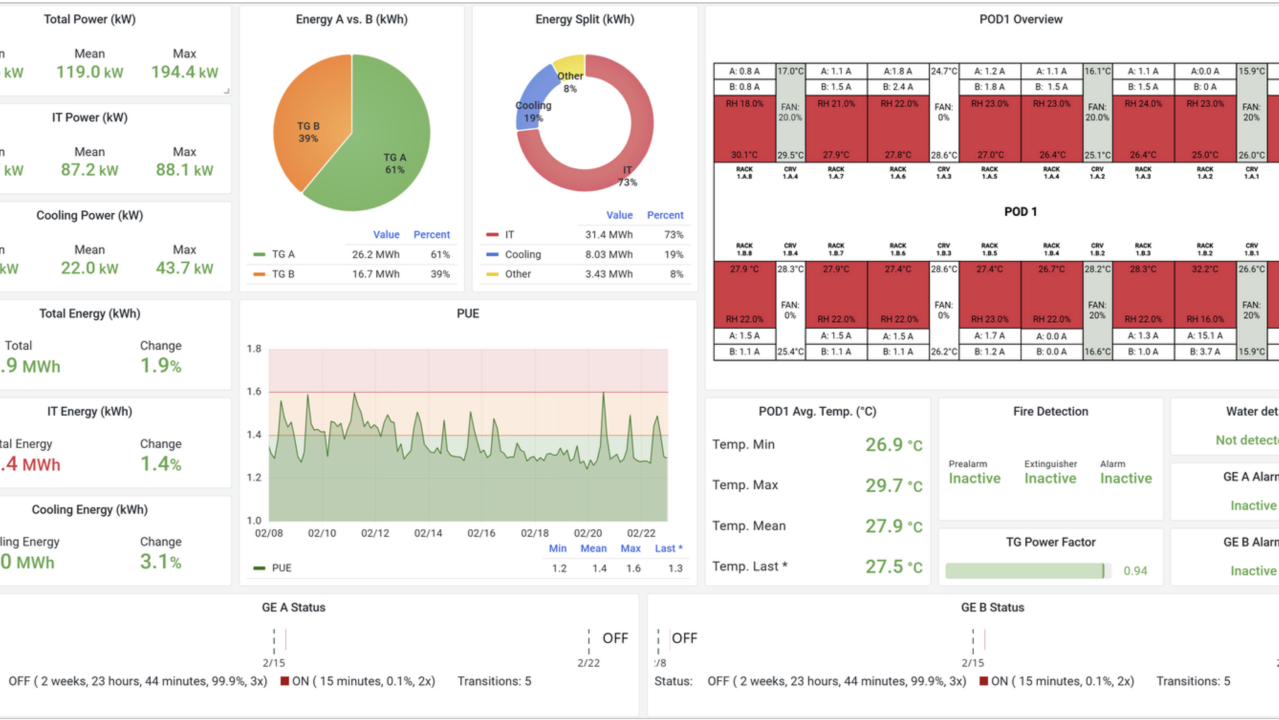
Better energy data derived directly from network equipment helps you measure all your energy improvement initiatives, provides direct energy savings of its own, and improves network reliability.
The key to improving telecom network energy efficiency lies in creating standardized data from the different makes and models of your existing site power and cooling equipment using widely used open-source tools. We believe this is the method EVERY telecom operator should use and will be using in the future.
What Should You Do?
Contact us and ask us to show the data and methods we’re recommending here. We’re happy to show anonymous data from real projects to you and discuss the methods used to produce it. Because we use only open-source tools and don’t produce or use proprietary products, our role is collaborative and service-based. Our job is to help speed up the adoption of these methods.
Ask us to:
- Help you understand how to begin,
- Show you what is possible today,
- Speed up your internal efforts,
- Solve specific technical challenges, or
- Collaborate on implementation of full systems.
Why It Is Better
A More Useful Solution - You can begin measuring energy efficiency at each site—across every site type in your network, from data centers to small cell sites—without any changes to site equipment. Data inputs like utility billing and even future sources like IP cameras or AC meters can be combined with this standardized data for a more complete picture. (More on IP Camera integration into these same tools soon—cameras have unique implications we’ve found even for energy efficiency.)
You can create new metrics like popular power usage effectiveness (PUE) measurements used in data center environments for every site type in your network, and we can show multiple examples from past projects.
Lower Cost - No need to buy new hardware or proprietary software licenses. Works with your network as it is now using widely used open-source software.
Faster Deployment - We can deliver initial data from a small group of sites (~5) in about a week, once a project starts. You gain value immediately at each stage of deploying these solutions. Once five sites are done you are underway, and it is just a question of adding more sites. Entire networks can be completed at a fraction of the time and cost.
Lower Risk - There’s no product to lock into, no mandatory maintenance contracts, low upfront investment, and no tech that will become obsolete. Standardized data is inherently lower risk than large hardware deployments or committing to proprietary software. Standardized data is perfectly suited for upcoming advancements in AI.
Greater Flexibility - We’ve worked with gear from over 100 manufacturers. This method frees your future equipment buying decisions as you can use this data standardization method with any equipment you may choose to use in the future.
Let’s Talk
This methodology works on many kinds of network topographies, and we can show multiple examples of what is described here. Large telecom operators have bold energy goals, but few manage data from each site adequately to support real energy efficiency efforts. Our mission is to accelerate energy efficiency across every telecom network.
We’re ready to help—through collaboration, engineering, training, guidance, or simply give some advice. Let’s talk!