Vendor Agnostic Energy Efficiency
 Jon Baars
Introduction
Years ago, I was interviewed by a towerco publication and asked a blunt question: “Why Do Most RMS (Remote Monitoring Solution) Deployments Fail?” RMS may mean different things to different people, but generally we are talking about some efforts to improve network reliability and efficiency.
I had worked on several RMS hardware deployments for MNO's across thousands of cell sites that were successful in delivering advanced energy management and disaster recovery functionality, but these deployments all shared one critical characteristic: they were greenfield networks where a hardware RMS solution had been installed at 100% of sites as the network was built.
Greenfield networks are extremely rare — and inevitably become brownfield over time. This challenge applies to towercos, where networks are constantly bought, sold, and merged, and data centers, where even a brand-new facility with a single, consistent power vendor eventually ages into a legacy site and rarely stays aligned with your existing or future facilities.
Most vendor specific legacy energy management solutions fail before they start — not entirely because of technical flaws, but because of architectural (Data silos) and economic limitations.
This article explores:
Proprietary vendor-specific solutions most commonly used to try and manage network energy today
Why they fail
New and better approaches that are replacing them
History
In past projects involving proprietary, hardware-based RMS deployments, ClaritechIO began using open-source software “workarounds.”
We used open-source tools to:
Collect data from existing site equipment where it wasn’t economically viable to install dedicated monitoring hardware.
Collect data from previously deployed competitive vendors’ RTU's or IoT equipment, AC meters, or cameras that had been "orphaned" and couldn't logically be monitored by a new piece of hardware.
Add data visualization via open-source tools like Grafana when customers lacked a platform to display insights, or delivered data to tools already available like Tableau.
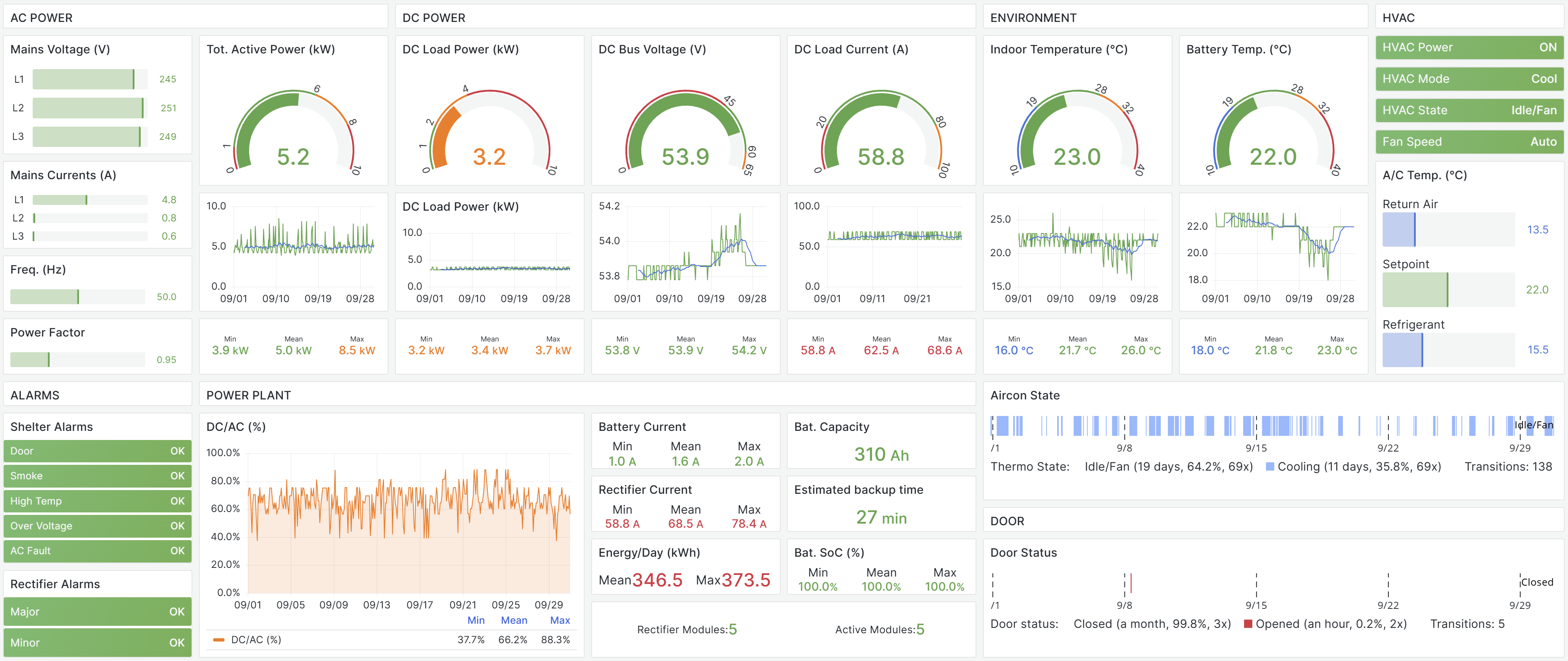
Deliver streamed data via Apache Kafka for customers who wanted to integrate it directly into existing back-end software systems.
Over time, as we better understood these tools, one thing became increasingly clear:
Open-source tools aren't workarounds — they are fundamentally superior.
The model flipped completely: instead of designing solutions around proprietary hardware-first deployments and using open-source tools to cover gaps, we began to do the opposite. Open-source software first, with hardware added only where a specific ability of hardware was absolutely necessary.
Open-source tools:
Work Anywhere in the World – Open-source tools deploy cost-effectively to networks in any region of the world, overcoming the reality that advanced monitoring solutions based on monitoring hardware are almost exclusively used in wealthier countries.
Work with Any Equipment – Perfect for brownfield networks where replacing or installing new hardware isn’t realistic. Adapts to existing DC plants, HVAC, batteries, and generators across data centers, edge sites, and mobile networks.
Overlay your Existing Network - Can rescue data from failed or partial deployments of IoT or RTU hardware.
Integrate with Existing Software – Deliver standardized data into your existing dashboards, OSS/BSS platforms, or analytics tools — no need to replace your back-end systems.
Are Future-Proof and Vendor-Agnostic – Choose any hardware, any vendor, any model going forward. Open-source tools ensure your data strategy and network remains flexible and free from vendor lock-in.
Delivers a better end result. The resulting solutions are simply better.
Data First
The key is to approach energy management in your network from a data-first perspective, not by tackling each individual power-related challenge in isolation.
You don't have a metering, billing, cooling efficiency, or diesel fuel measurement problem. It’s not about IP cameras, RRU power monitoring, or PUE metrics either.
It is a data problem. You don't have the data you need to solve the issues above.
My goal in this post is not going to dwell on the features and benefits of open-source software, many of which are already listed here, or on the exact method by which it is accomplished which you can read about here. Instead I'm going to focus on a fundamental architectural aspect about existing tools to answer the question above, “Why Do Most RMS (And All Other Vendor-Specific) Solutions Fail?”
I'll talk about what is likely going on in your network right now and why it is preventing network wide energy management.
Data Gaps and Data Silos
Network energy efficiency measurement is primarily blocked by complexity in the network. I talked about this issue in a previous article, "Why Network Energy Problems Go Unsolved - And How To Fix Them". There are obvious differences in how your situation will look if you are mobile network operator (MNO), towerco, data center operator, or some other sort of telco network, but using cell site infrastructure as in Diagram 1 below illustrates the general point.
The primary problem is that energy-related data is currently missing or siloed across different systems and vendors.
The diagram below represents typical network equipment across four different site types.
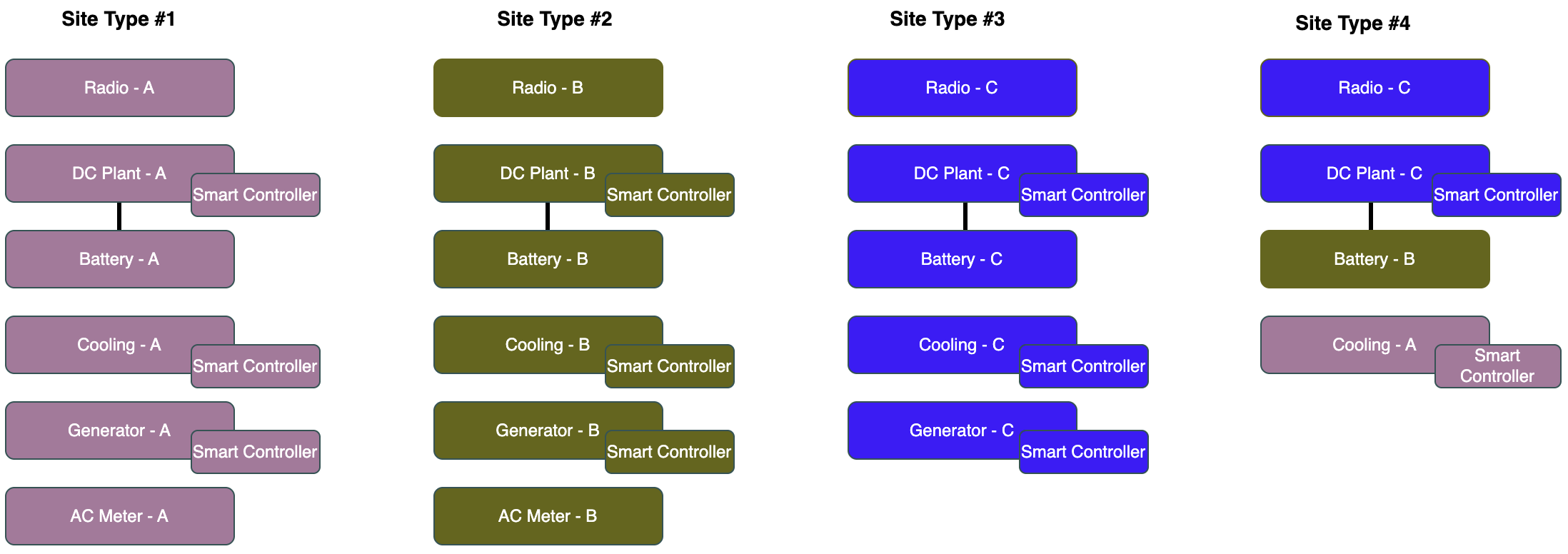
Diagram 1 - The purpose of the diagram is to show the primary data challenge prior to any solutions being added.
- Different Makes of Equipment - Different colors designate different brands. In Site Type's #1 and 2, you may have identical classes of equipment, but different makes of equipment, with different management interfaces.
- Differences in Classes of Equipment - Sites #1 and #2 have identical classes of equipment. Sites #3 and #4 have different equipment classes - Site Type #3 lacks an AC meter and Site Type #4 lacks an AC meter and backup generator.
- Differences in Mixes of Equipment - Site #4 has a different mix of equipment in a site by brand.
- Large Number of Site Types - A large network could end up with 100+ "site types."
The different tiers described below are generalized, but we can say with confidence that almost all networks currently suffer with one or more of the issues described below.
Tier 1 – Data Gaps
Diagram 2 represents sites where no meaningful effort has been made to manage energy efficiency and reliability at any scale. Most networks will likely have basic fault monitoring in place — typically via contact closure alarms or limited SNMP messaging to an NMS.
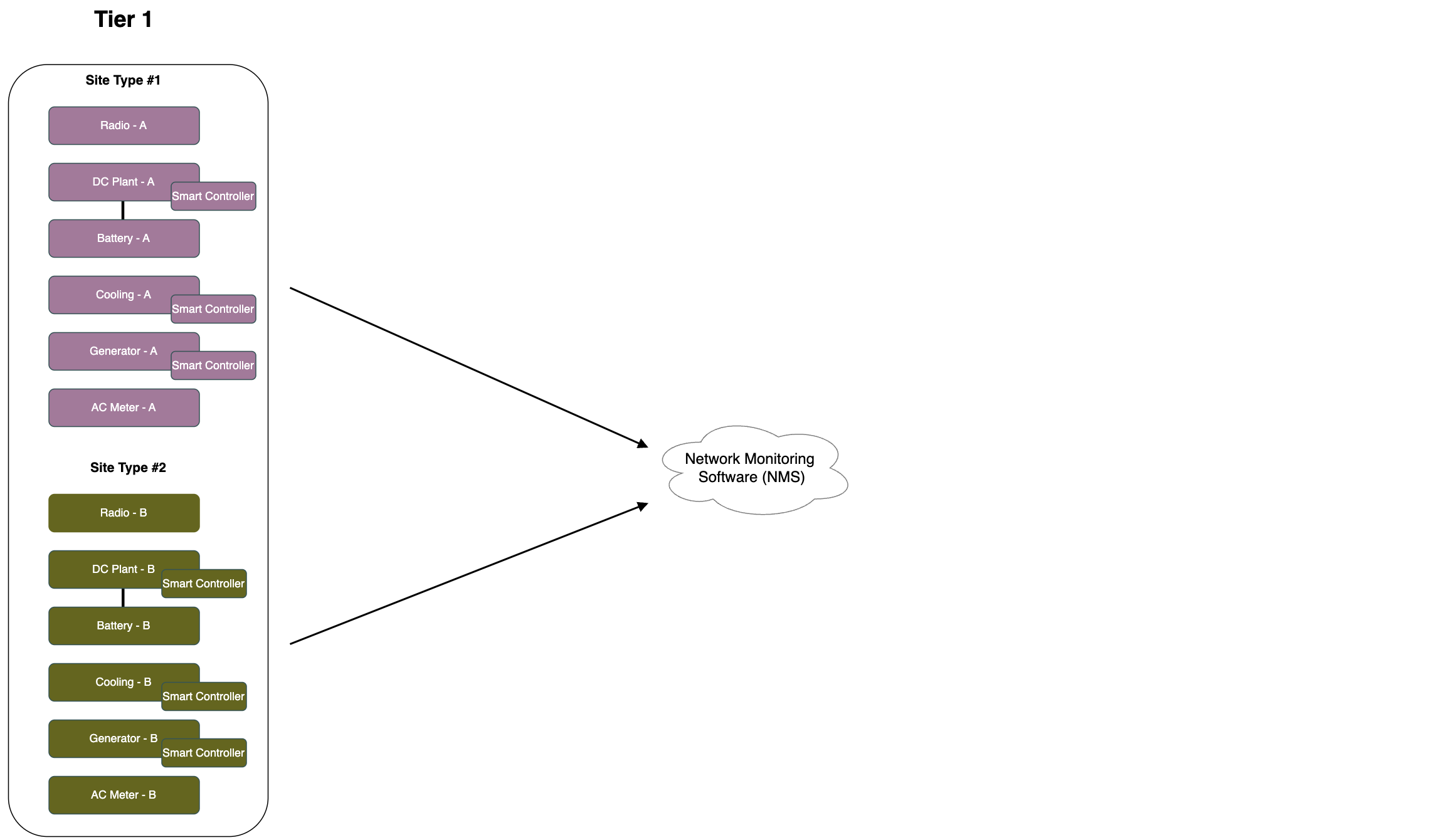
Energy data isn't “siloed” at Tier 1; it’s more accurate to say the data is effectively stranded in Tier 1 within individual devices. Many of these devices — DC plants, batteries, generators, cooling systems, and HVAC units — produce valuable energy telemetry, but it isn't being collected or "asked for".
Smart controllers in your existing equipment represent a vast, embedded, untapped resource: underutilized computing power that can be leveraged for smarter energy management.
Tier 2 – Element Management Software (EMS)
EMS tools are provided by some equipment manufacturers and can be added to the network to manage specific vendor's own products. Some include energy efficiency features. EMS tools can optimize a single vendor’s equipment but create a 2nd tier of stubborn data silos, as shown below in Diagram 3, that block wider energy management.
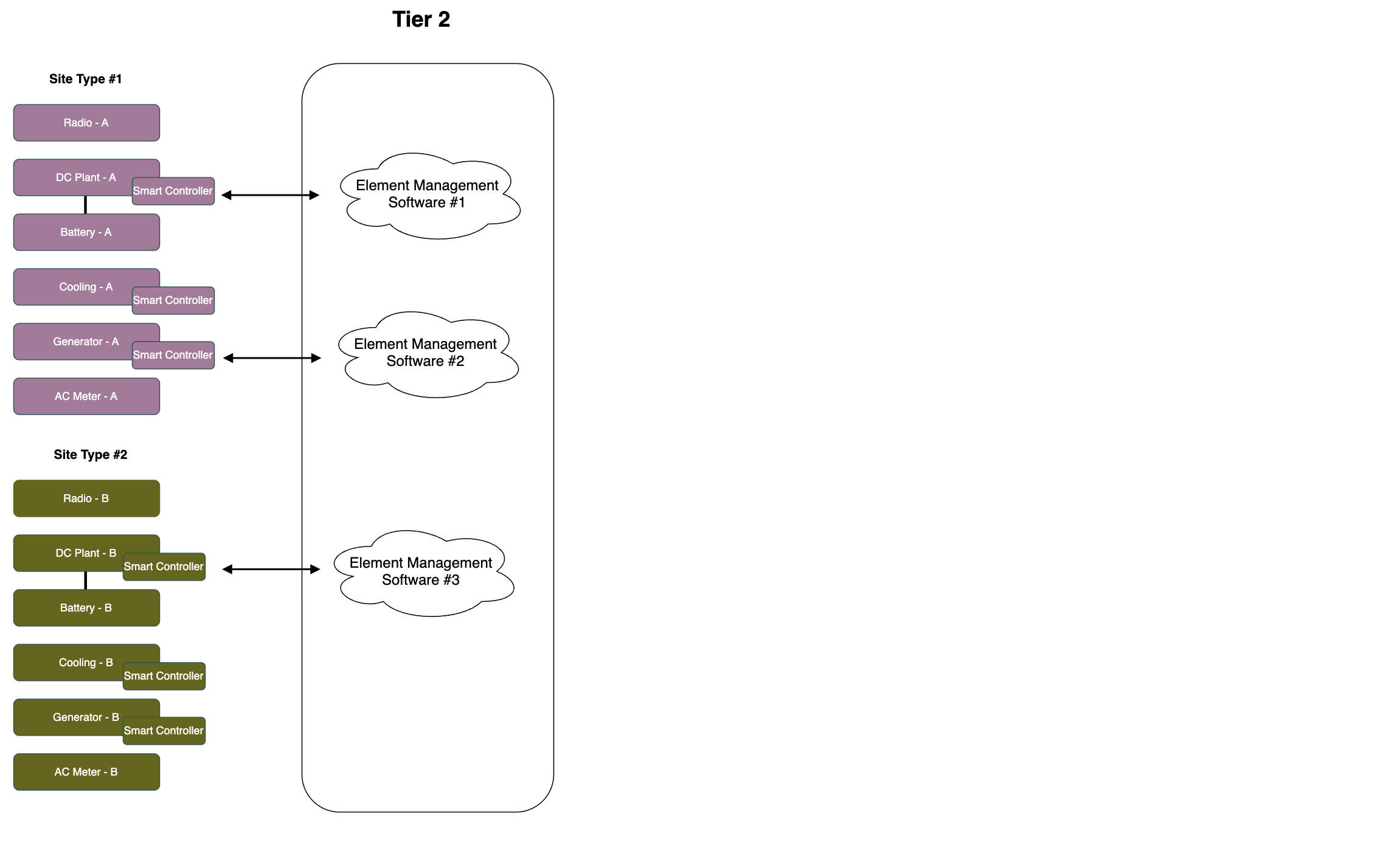
Equipment vendors aren’t positioned to manage energy efficiency across your network as structurally they are disinclined or technically unable to work with competitor's equipment and would almost never integrate their EMS with different classes of equipment. The implied answer is: "Use more of our equipment — and ideally, only our equipment” in order to get value from the EMS.
In brownfield networks with multiple generations and vendors, relying on individual EMS tools for network-wide energy management is architecturally doomed from the start, siloing data by class of equipment and brand.
Tier 3 - Hardware
A common solution to try and solve this problem is to add hardware at sites with a specialized purpose of gathering and standardizing data from equipment. Diagram 4 below shows a 3rd tier (Tier 3) where hardware can cause data silos.
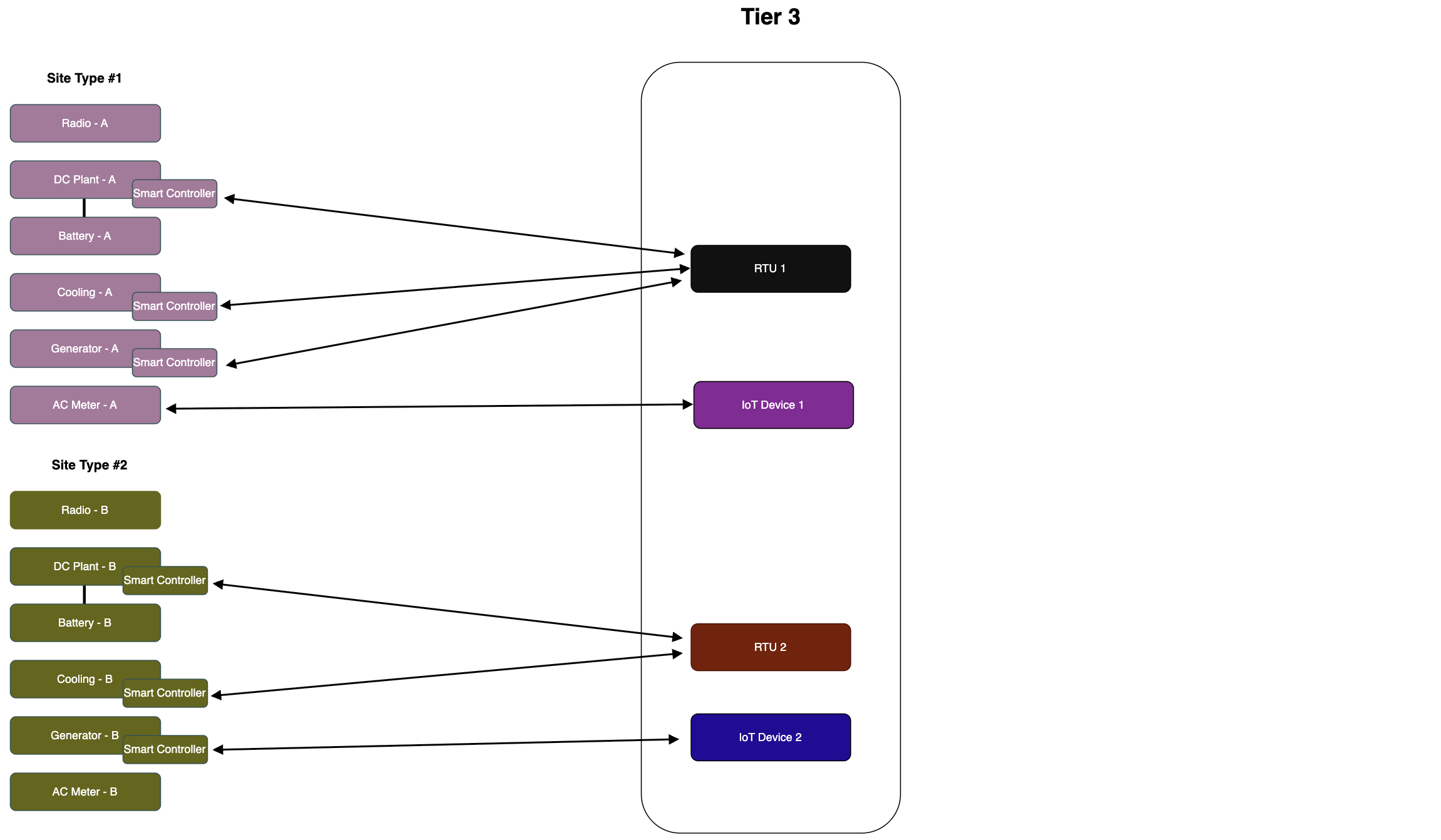
IoT Solutions
A telecom operator may try to solve a specific power-related operational problem by locating solutions from the broader IoT market that seem to directly address needs.
For example, an operator might deploy modem-based IoT devices for:
AC metering (“we need to bill customers or measure site energy consumption”)
Generator fuel-level monitoring (“we need to prepare for disasters or prevent fuel theft”).
This approach ignores the larger data management challenge that this isn't the ONLY data you need from a site. In most cases, IoT solutions deliver the lowest ROI for telecom networks due to:
- Limited Data - IoT devices are typically small and focused on very few data points for one specific issue (eg. Diesel fuel level).
Expensive Hardware - Device costs and particularly installation costs.
New Modem Network - Managing modem networks and private/public connectivity when a network may already be available for use, or you should create only one network (if you were a towerco, for example) for all your data needs not a new modem network for each individual problem.
External Dependencies - Data routed off the operator’s network and into a public cloud IoT platform, with a potential need to then re-integrate data from the IoT platform back onto an operator's network to get use from it.
RTU Solutions
A better option than IoT devices is often proprietary, telecom-specific Remote Terminal Units (RTUs). RTU's are more capable and can reduce data silos across different classes of equipment — but they’re only truly effective if deployed consistently at 100% of your sites.
An RTU can consolidate and standardize data from 4–5 different pieces of site equipment into a single stream, but most networks face inconsistent deployments:
Some sites have RTUs, others don’t
RTUs installed over the years are often configured differently
Multiple RTU vendors may exist across the network, with different skill levels and product vision between vendors.
You still have the challenge of standardizing data across different RTU makes and configurations and sites without RTUs. RTUs also have high total costs — not just for hardware and installation, but also for the logistics and time required to deploy them across a large network. It’s difficult to justify this investment if RTUs only reduce silos rather than eliminate them entirely.
It is necessary to start projects with RTU's or IoT equipment with an intent to use them in 100% of sites, or you are just creating a future project where you still need to standardize data from all your sites.
Tier 4 - Centralized Software
This could be a proprietary energy management software, a building management software, an IoT platform, or some type of future over-arching energy software supplied by telecom giants like Huawei, Ericsson, or Nokia.
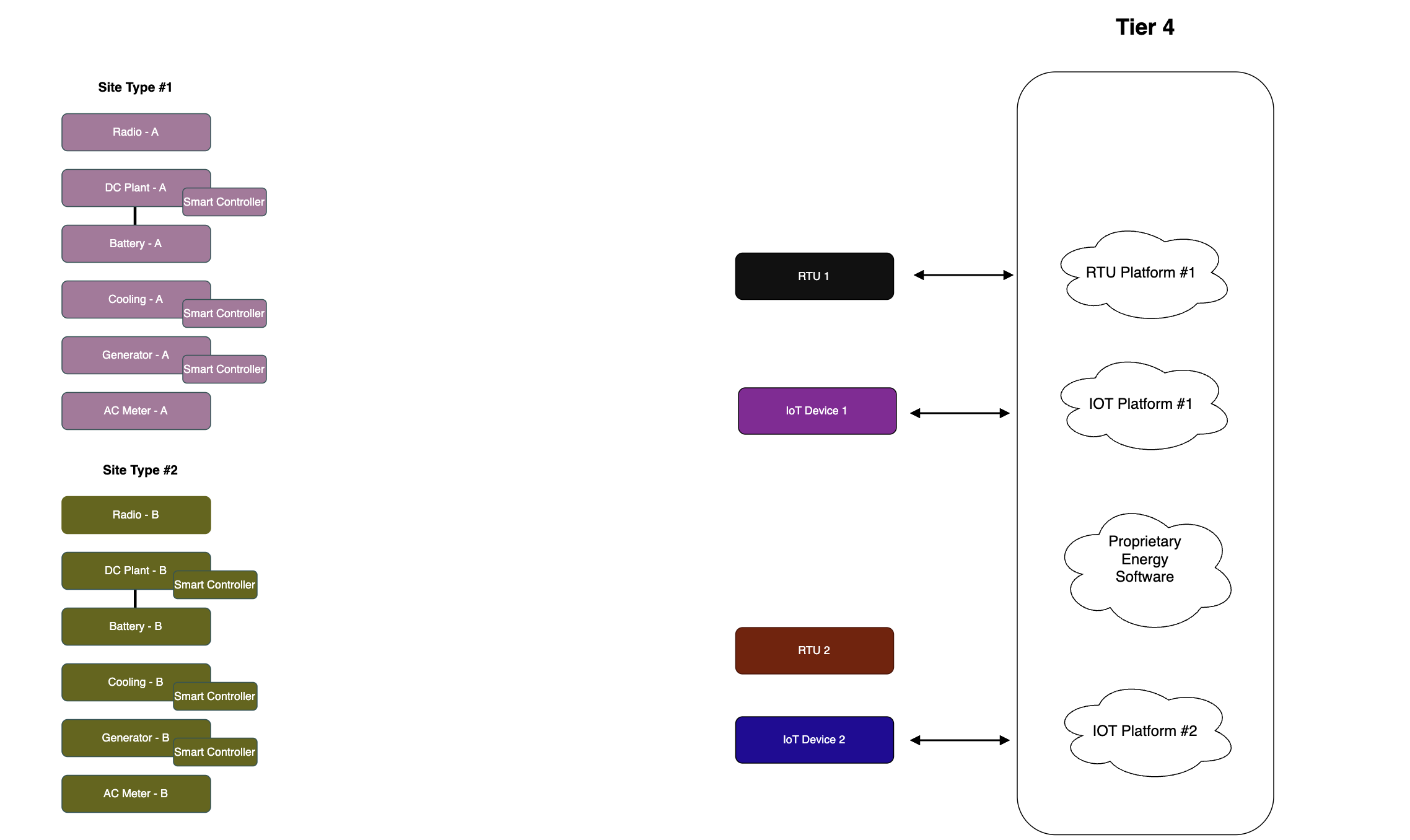
This software may provide some centralized control over sites and equipment types, but this software can become a 4th proprietary data silo (Tier 4) as shown in Diagram 5. While it’s often possible to extract data through integrations, doing so comes with significant costs:
Installation and licensing expenses
Ongoing support and maintenance
Training your workforce on a vendor-specific tool
Long-term vendor lock-in, tying your operations to their platform
And that’s before you integrate with other data sources.
Solution
New open-source tools remove all the places where data currently “pools" or fragments, as shown in Diagram 6, resulting in a simpler, more flexible, and less expensive solution.
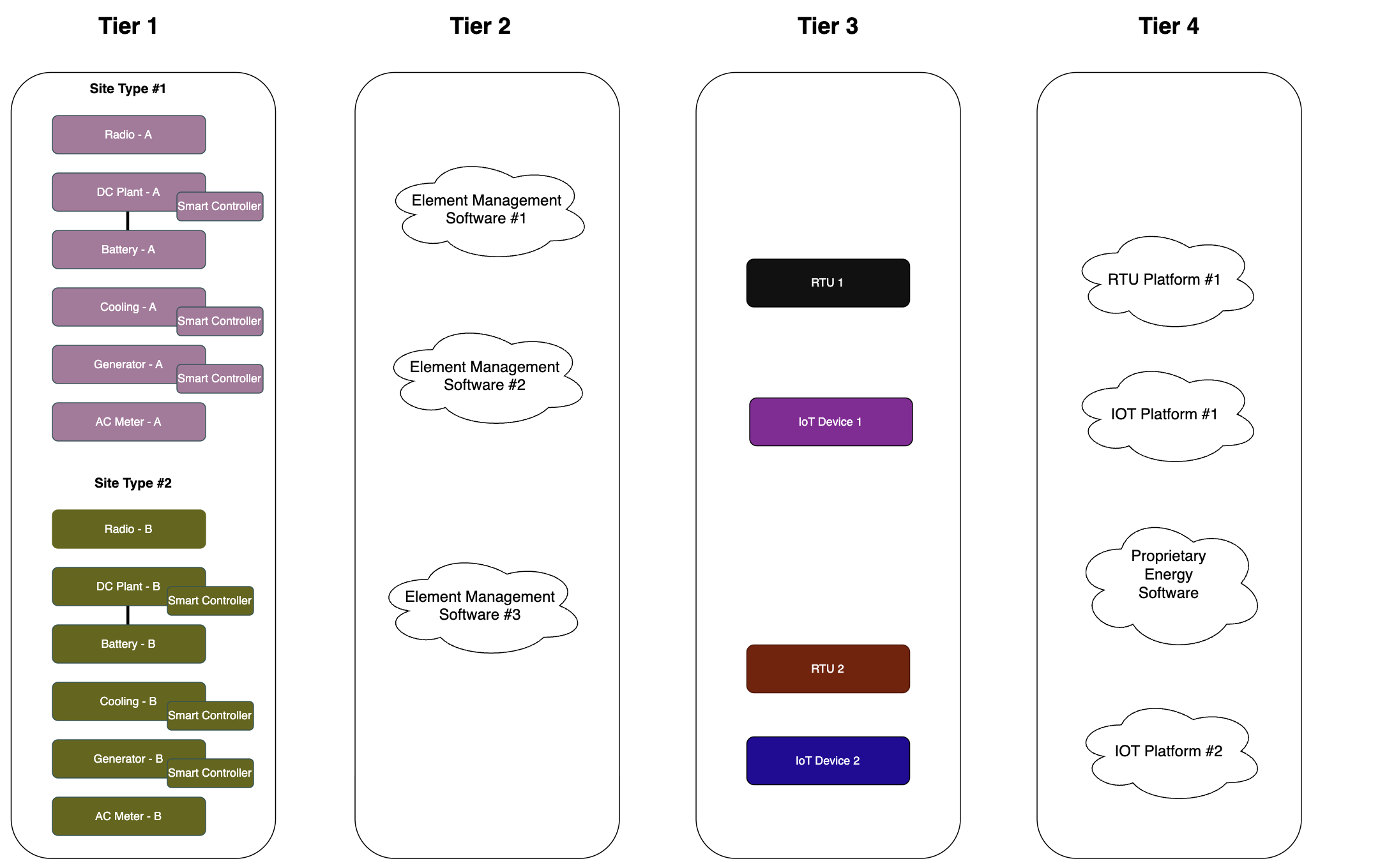
Tier 1 Silos - Modern open-source tools can interface directly with existing site equipment, eliminating the Tier 1 data gaps described above.
Tier 2 Silos - Open-source tools also avoid Tier 2 data silos that Element Management Software (EMS) creates, while still allowing you to use beneficial EMS features, like firmware updates, without disruption.
Tier 3 Silos - It isn't mandatory to deploy new hardware at every site and open source tools can even gather data from existing RTU or IoT equipment in your network, avoiding or removing Tier 3 data silos.
Tier 4 Silos - Modern open-source solutions deliver clean, standardized data from all your sites - regardless of vendor or equipment type - and make it available to any application you choose, avoiding the Tier 4 data silos of proprietary management software.
While we often recommend beginning by simply visualizing this data in the excellent open-source tool Grafana, it’s inevitable that this same standardized network energy dataset will become foundational for AI-driven analytics and automation in the near future. The method described above and the resulting standardized data is well suited for other internal data efforts your organization may already have in place for the use of Confluent, Databricks, Snowflake, or any other data management initiatives. By adopting these methods, you have both the best and most cost-effective tool for today and flexibility for the future.
Summary
So, “Why Do Most RMS (Remote Monitoring Solution) Deployments Fail?”
The answer comes down to data silos. Most RMS solutions create data silos that make network-wide energy and site management harder, not easier. Each new vendor-specific tool you add typically increases the problem instead of solving it. A better approach is to eliminate silos by managing standardized data streams across your entire network.
The good news is that this can be done as an overlay on your existing network. There’s no need to replace current processes, add hardware, or disrupt operations. In fact, you can pause investments in additional proprietary RMS tools, since they’ll only compound future challenges and those resources can be dedicated to a system that will likely cost less and be better overall.
Talk to us about the open, vendor-agnostic data overlay we describe here. We can prove it through a low-risk trial — one that’s non-disruptive to your day-to-day operations.