How To Measure Energy Efficiency For Towercos
 Jon Baars
Introduction
Tower companies (towercos) face complex energy challenges that differ by region. In many markets they manage energy directly, making accurate measurement, efficiency gains, theft prevention, and billing essential. Yet towercos often lack the IP network connectivity needed to collect site-level energy data—leaving them least equipped to solve the problem.
Despite years of investment in RMS, IoT devices, proprietary hardware, and vendor tools to enable data collection, towercos still lack clear visibility into site-level energy use, efficiency, and savings opportunities.
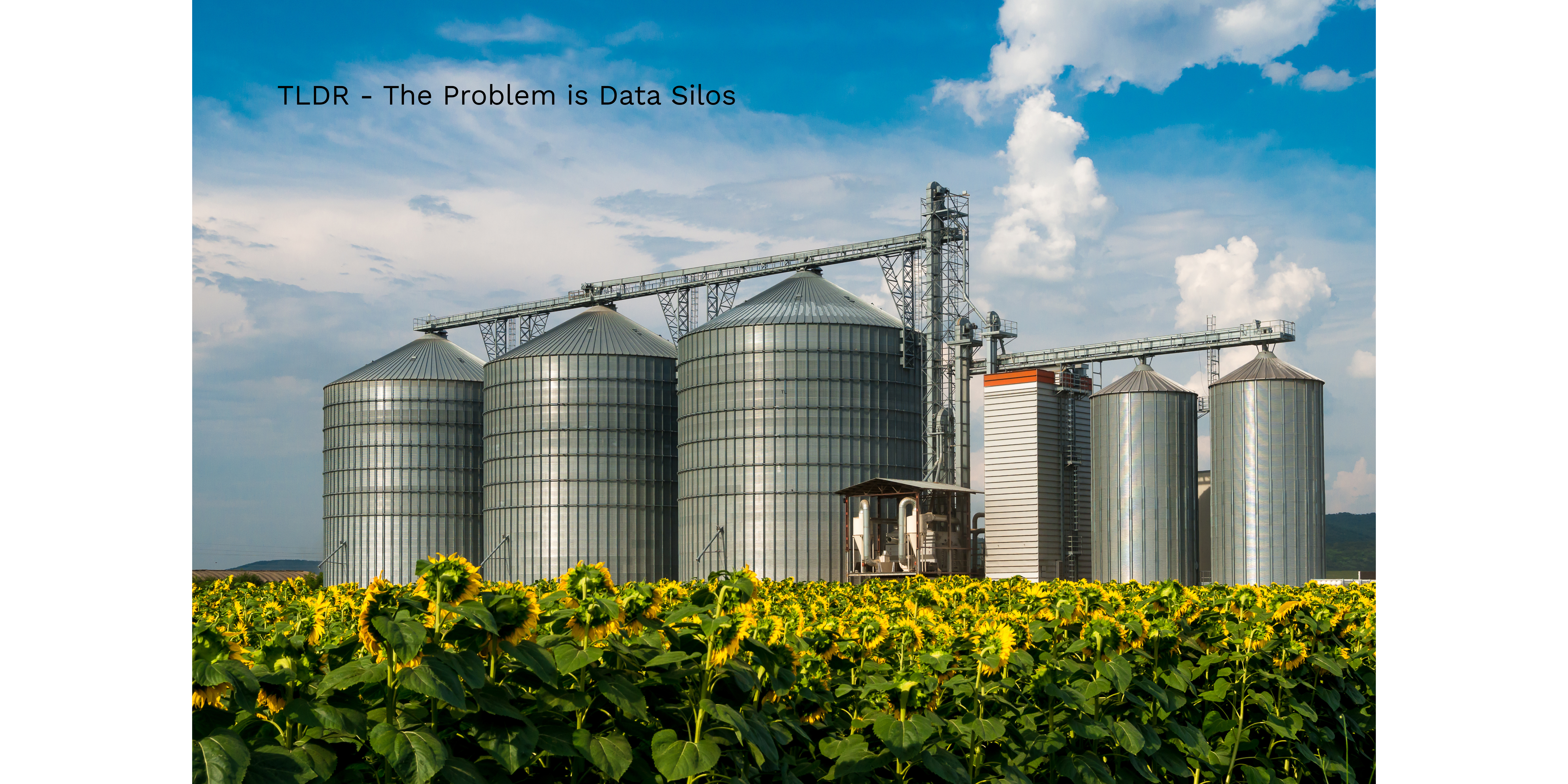
The core challenge data silos that result from legacy equipment. Multiple vendors, inconsistent equipment, and legacy monitoring tools have left operators with fragmented visibility. We know this well, as we supplied RMS solutions for years. As we explain in our article, "Vendor Agnostic Energy Efficiency", solutions based on hardware only worked well if consistently deployed across nearly 100% of sites, an unrealistic requirement for most networks.
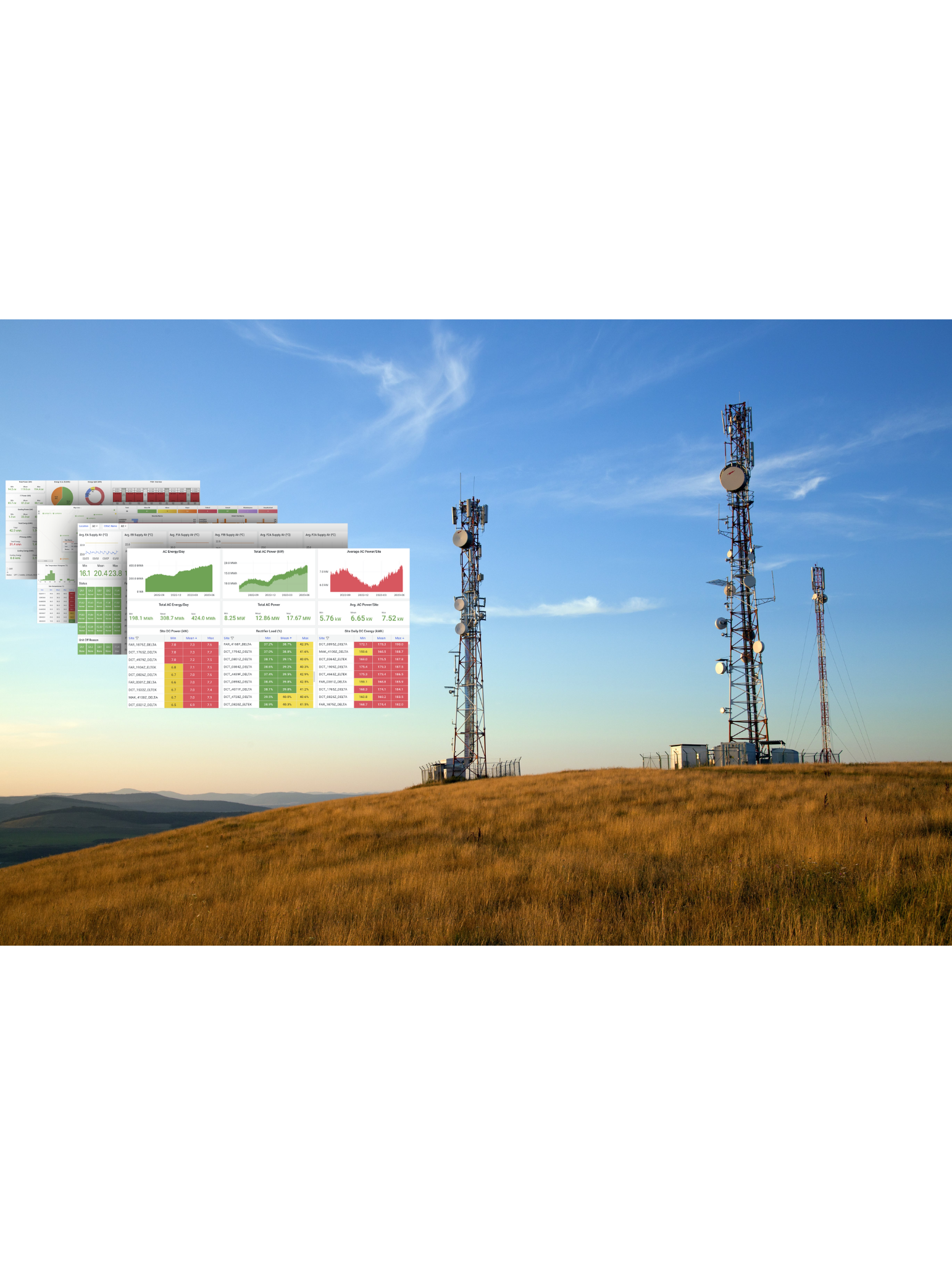
Our more recent experience proved to us there’s a better way. By leveraging modern open-source data-streaming technology, we standardize and unsilo energy data across sites, vendors, and equipment classes. This article explores how data streaming transforms energy measurement in towerco environments, why it succeeds where legacy approaches fail, and the tangible benefits operators can expect.
The Core Problem: Data Silos in Towerco Networks
A typical towerco portfolio spans thousands of sites, each with rectifiers, batteries, HVAC units, generators, and power meters—often from different vendors and of different ages. Business models also vary depending on each towerco’s agreements with MNOs, creating the need for flexible tools that are easily adaptible to match a towerco's responsibilities.
Traditional energy monitoring approaches rely on:
Vendor Element Management Software (EMS): These systems manage a single type of equipment (e.g., diesel generators, DC plant, HVAC) and for only one brand (e.g., Cummins, Delta, Huawei). While EMS can improve local efficiency and provide useful site-level data, EMS from hardware vendors create data silos and are not practical for network-wide energy management.
Most towercos run large brownfield portfolios, making it impractical to standardize equipment across sites. Operators rarely commit to a single vendor, so EMS ends up covering only a small fraction of the network, and most often the best features of EMS tools are tied to their latest equipment. Vendors often promote EMS with promises of powerful management features, but these rely on the unrealistic assumption that future hardware purchases and replacements will always match their brand and that 100% consistency on a single brand is possible.
Remote Terminal Units (RTUs): Proprietary devices installed at some sites to provide modem/IP access and connect to several power subsystems. While useful when trying to troubleshoot a single site, they’re inconsistently deployed—especially across large brownfield towerco networks—making standardized, network-wide energy data impossible.
RTUs may still be needed where no network exists by providing a modem for network access to the site for a towerco, but data streaming tools offer a major advantage: they can integrate with existing RTUs and a wide range of industrial modems. In fact, one of their strongest benefits is the ability to “rescue” orphaned RTU deployments from past projects and bring them back into use, providing you a more cost-effective solution for your existing network as well as a better forward path in the future.
IoT devices: Narrow, modem-based solutions (e.g., AC metering or fuel-level monitoring) often built for other industries. At cell sites, where data is needed from multiple subsystems, these single-purpose devices lead to multiple modem connections per site—an inefficient and costly approach. Similarly to the RTU issue above, it is possible to use data streaming tools to "rescue" the data from these devices.
None of these existing solutions are a perfect answer to the problem at hand.
A Data-First Approach with Streaming
ClaritechIO’s philosophy is simple: treat energy efficiency as a data problem, not a hardware or software problem. New data-streaming methods enable a vendor-agnostic approach, focusing on creating standardized energy data from the existing equipment in your sites.
This data focus allows us to treat any monitoring hardware as largely equal to one another. Instead of costly new hardware at every site—often impossible in brownfield networks—we use open, standards-based streaming tools to extract and normalize telemetry from existing equipment.
This architectural shift allows you to:
Use Existing Hardware – If your network already includes RTUs, IoT devices, meters, or cameras, data streaming methods can often reuse them—especially valuable in brownfield networks with multiple hardware types already in place.
This architecture can also unify data across multiple RTU brands. For example, different RTU models may each report in a non-standard format to proprietary software, but during standardization, we can normalize data from different makes of existing RTU's.
- Integrate to Existing Software - If your organization already is using software tools, it is likely that new standardized data from these streaming methods could be integrated to existing software.
- Generic Hardware - A major advantage going forward is that you can use a wide range of hardware to provide the modem-based IP network. In addition to potentially using what is already in place in your network, you are also free to pick new hardware vendors going forward. We have successfully used multiple different powerful and cost-effective industrial IoT devices as the basis for new secure modem networks. These devices from Advantech are a good example of generic, powerful, and cost-effective modem solutions.
- Network Overlay - Add energy data management ability. Don’t disrupt your existing processes.
- Future-Proof - Unlike software or hardware, accurate, standardized data ages well. New data streaming architecture from companies like Confluent are likely to arrive in your organization in the future. If these tools are already present in your company, the methods we describe here are natively compatible with this upcoming technology.
- AI - We are so sure that the data-streaming tools we are talking about are inevitable, because they are a basis for upcoming use of AI. Our own experiments with AI/ML are quite interesting. We may be a ways away from a full network being operated with AI/ML embedded, but it seems like it is more a case of the technology maturing rather than there being any missing technology.
Benefits for Towercos
Granular Energy Measurements
Visibility into site-level metrics.

Aggregated Energy Measurement
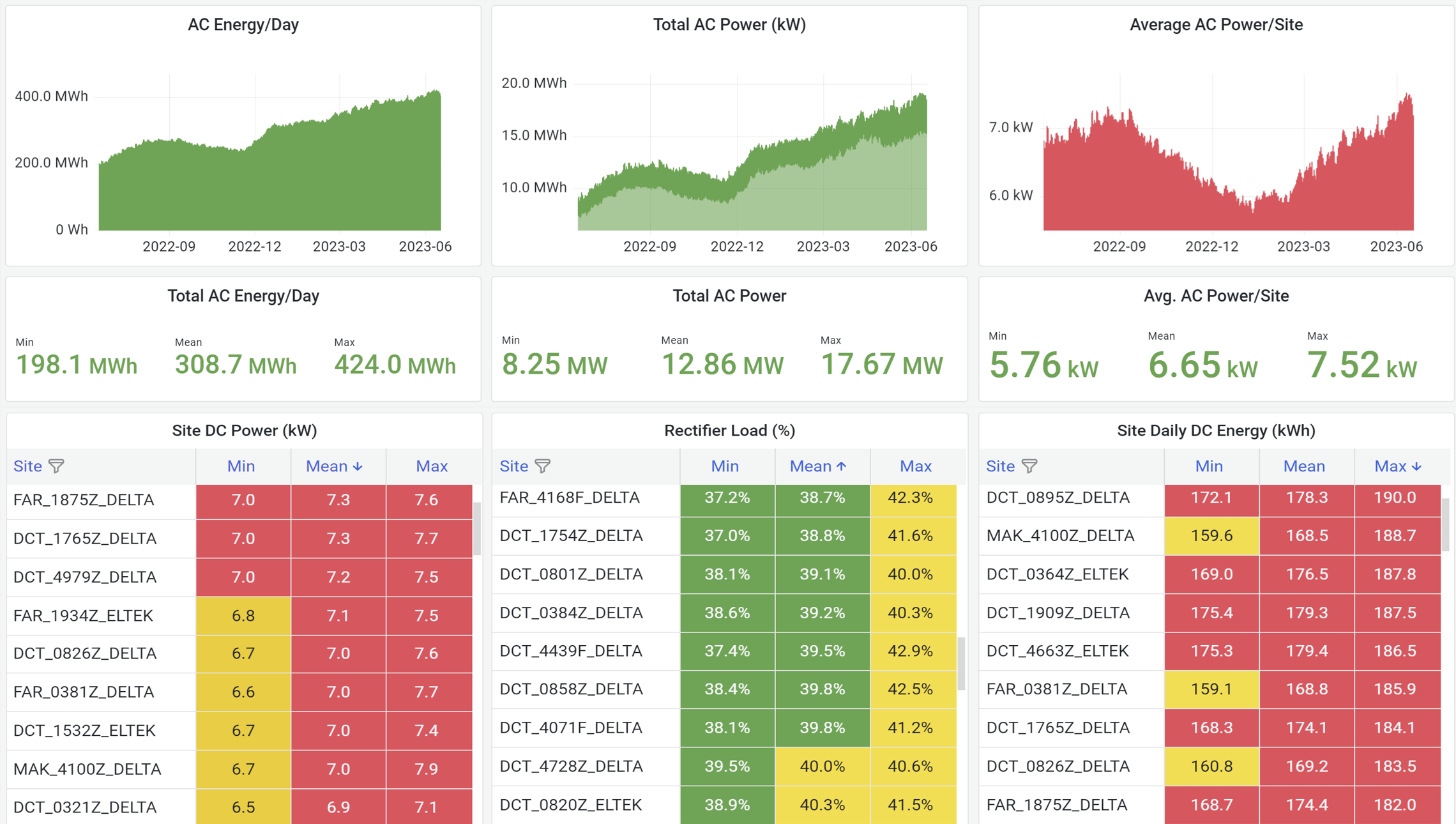
SLA Adherence

Energy Billing
This is a new application we are building to help integrate additional data from outside sources, such as tariff tables, and integrate new billing data streams into reports or other ERP or other systems within organizations to automate the billing process. See more about this application here.
Case Applications
Fuel Monitoring and Theft Prevention
By streaming generator telemetry in real time, towercos can spot unusual consumption patterns, flagging possible theft or leaks.
Battery Life Extension
Smarter charging and discharge strategies extend the life of backup batteries in both distributed towers and centralized data centers.
Cooling Optimization
HVAC and other cooling systems can account for 30–40% of total energy use. Streaming provides visibility into cooling efficiency, allowing setpoint optimization and fault detection.
IP Camera/Access Control
IP cameras aren't strictly part of an energy management program, but if you are going to the trouble to build an IP network based on modems in order to gather ANY type of data, we believe it is best to consider every type of data you need to collect. IP camera data is just another data source to be managed. There is much more about IP camera use in our article, "Using IP Cameras to Enhance Telecom Network Security."
Energy Capacity Forecasting
Analyze granular site energy data to optimize energy use and energy capex.
Carbon Footprint/ Energy Billing Calculations
Combine data sources to deliver actual carbon measurements or combine the data produced to create customer energy billing.
Conclusion
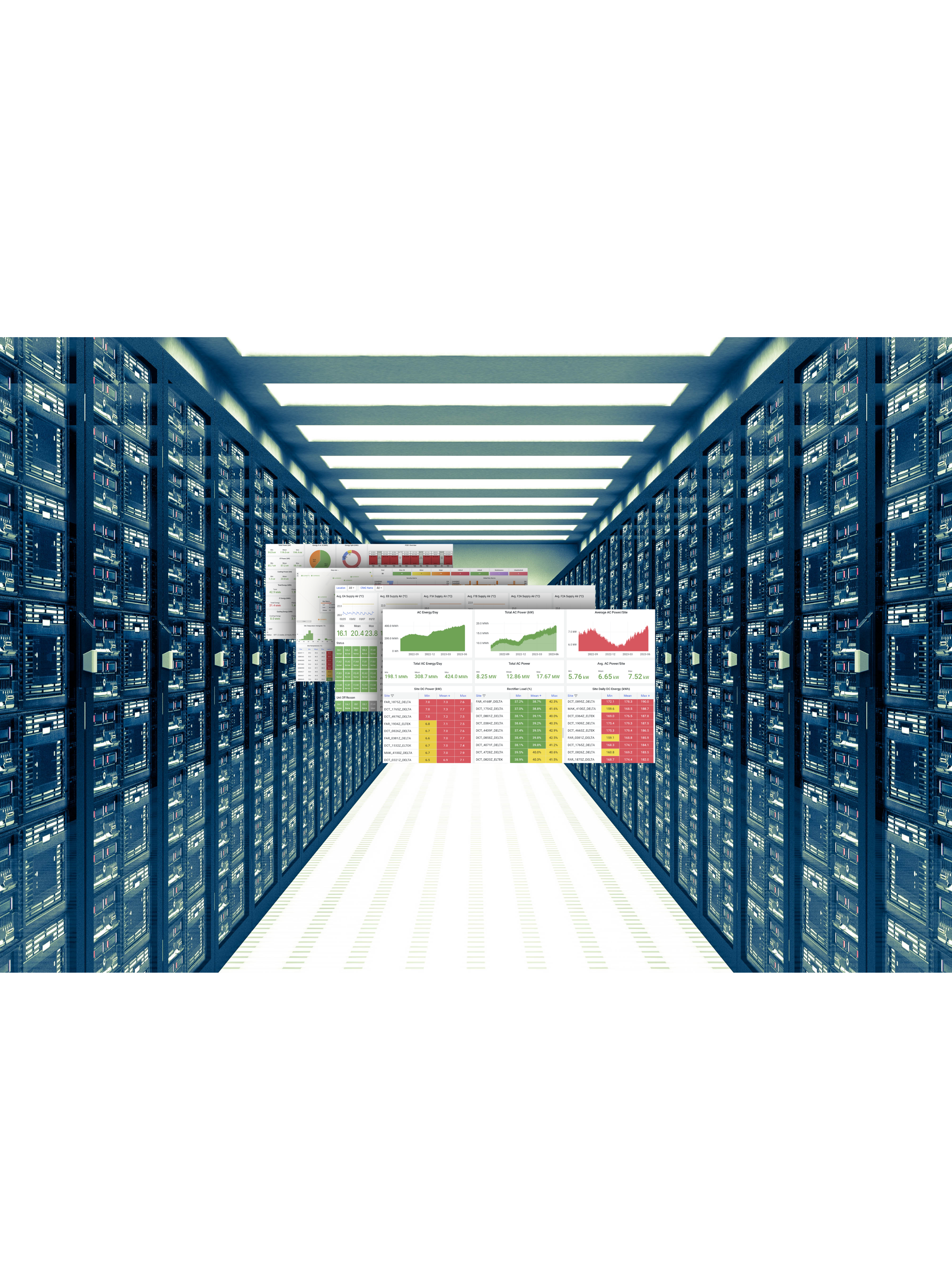
Towerco's need to start, TODAY, to uncouple their energy measurement (data) strategy from energy efficiency efforts. Instead, you can use your energy measurement strategy to optimize your energy efficiency efforts. Traditional monitoring solutions have failed to deliver because they treat energy efficiency as a hardware or software challenge. In reality, it’s a data challenge.
If you’d like to see how standardized data streaming can transform energy measurement in your network—whether distributed towerco sites or centralized data centers—contact us to see real data collected from real networks.