The Case for a Network Infrastructure Data Strategy: 9 Things That Change With Better Data Planning
 Jon Baars
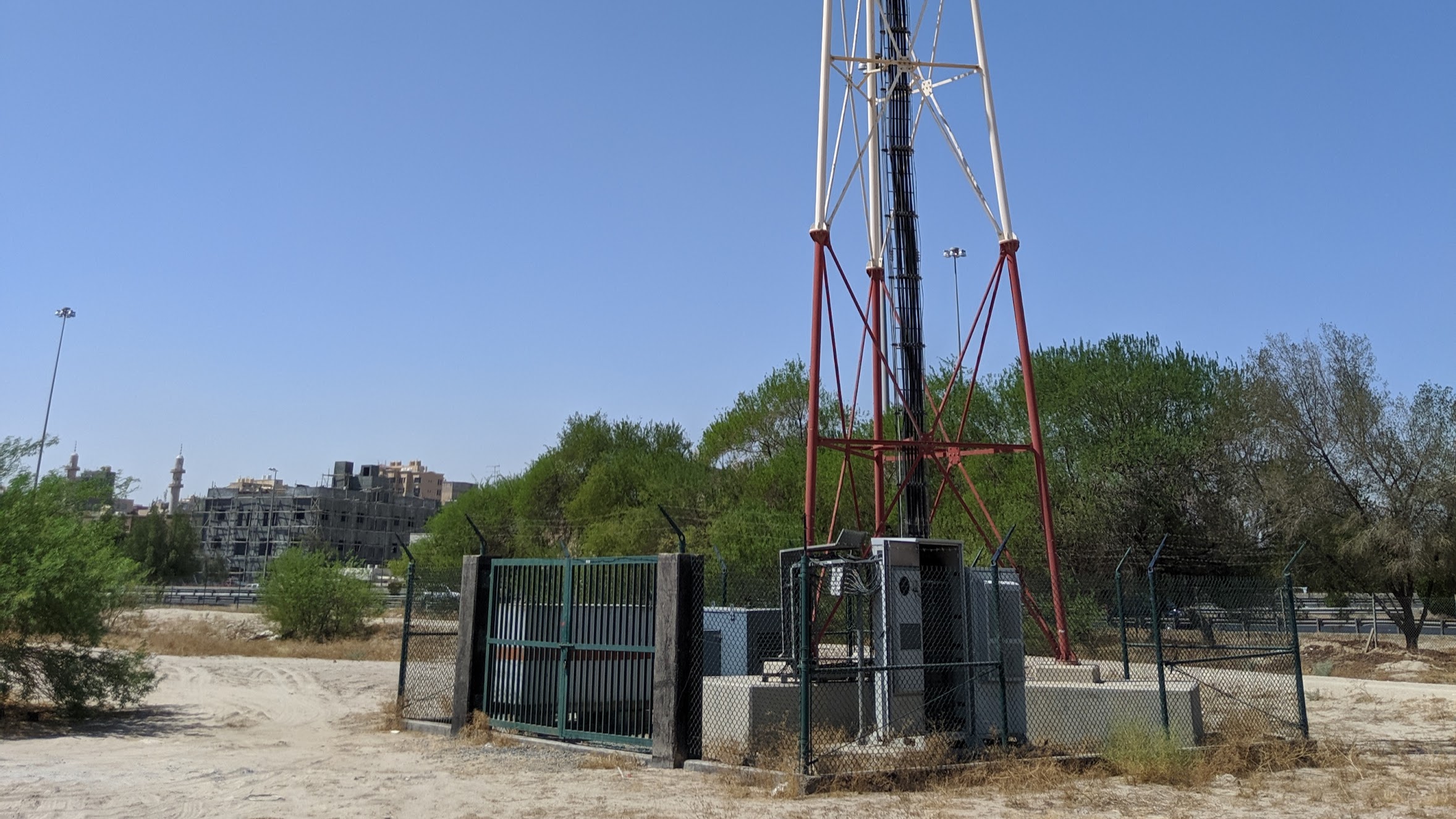
An RTU was supposed to solve this. Then an IoT platform. Then new NMS software, a new element management software, a next-generation DCIM, or newer smarter controllers on new site equipment. Each arrived with the same promise: get visibility across the network of power, security, and environmental issues in sites, and give operators a coherent picture of this distributed infrastructure.
None of them solved it — because every attempted solution was proprietary hardware, proprietary software, or both, and didn't solve a fundamental underlying problem. Proprietary solutions can't be deployed retroactively across 100% of a mixed brownfield network. Each one became another silo. Most networks today are the accumulated result: a mishmash of monitoring approaches.
We know this from the inside. Before ClaritechIO, we spent years trying to get operators to standardize on RTU equipment. We believed in what we were selling and we succeeded where our equipment was built in to 100% of the network from the start, but you can't make a heterogeneous brownfield network homogeneous by adding more hardware to it, and new proprietary software is itself just a new data silo.
The answer isn't hardware or software — a fundamental first issue that must be addressed is standardized data as an architectural layer that lives between the two. Standardized data is possible from whatever hardware you already have and is compatible in addition to, or as a feed into whatever software you already use.
Here is what changes when you fix the foundation.
1. Reliability Improves Immediately
Most operators are still working from small bits of passive infrastructure data from their sites. Basically contact alarms or other equivalent SNMP alarms. A tool that allows better visibility, like better dashboarding, ISN'T what actually gets to the fundamental problem. What you see in any interface is a function of what data exists upstream of it. A better dashboard just shows you the same sparse data picture more attractively. We often include dashboards, but what we are doing isn't just dashboards on data you already have.
What improves reliability comes BEFORE the software visibility layer: standardized telemetry from every piece of equipment, regardless of vendor. The largest reliability gains come from switching from the occasional alarming of your existing alarm scheme, to continual standardized telemetry data on TOP of your existing alarm scheme. You can view this new additional data in Grafana, push it through an AI pipeline, normalize output to include this data within your existing NMS, or use it to create new data and metrics. Without standardized data, no software choice fundamentally improves this situation.
During a natural disaster, an operator needs a triage picture across every affected site — which are on generator, what fuel levels, battery states, grid power, and runtimes are, which sites are trending toward failure. That requires 50–100 variables per cell site per minute, as well as possibly creating new data and metrics, not the threshold alarms you currently have.
2. You Can See Your Entire Network at Once
A single coherent view of distributed energy, cooling, and security infrastructure doesn't exist for most operators — not because site equipment doesn't produce the needed data, but because this data is inconsistent between vendors.
A data layer that normalizes energy, cooling, and security telemetry across every equipment type and vendor produces a single comparable dataset for the first time. 25,000+ data points per minute from a data center, 50–100 standardized variables per cell site — across thousands of sites, easily visible in open-source dashboarding tools like Grafana, and creating massive growing data sets for future AI use.
This same data method applies to every site in your network, no matter its size. It can be applied across all your sites, no matter what type of network you are operating.
3. The Economics Are Better from Day One
By stopping the cycle of proprietary hardware and software initiatives, most operators will find more than enough budget to fund a data strategy network-wide — and likely spend LESS overall than they're spending now.
Legacy RTU monitoring initiatives costs $500–$1,500 in hardware, $500–$1,000 to install, plus annual software licensing and support — over $2,500 per site before even beginning to address the data these devices produce. There are similar costs to vendor element management software with hardware lock-in, IoT solutions, etc.
A managed data layer costs approximately $250 per cell site to implement, depending on how much data is available — integration, standardization, pipeline, and dashboarding included. Data center efforts are priced differently, but still more favorably than chasing retroactive hardware standardization or migrating to new DCIM software. Your existing equipment is the data source, and in a brownfield network there is no choice but to work with what you have. Your existing equipment starts delivering what it was always theoretically capable of.
4. Vendor Lock-In Breaks in Both Directions
There's an organizational benefit here too. Purchasing wants to put forward a basic spec that any vendor can meet for equipment like cabinets, RTUs, rectifiers, batteries, cooling, and back-up power and let them compete on quality, service, and price. That's the correct instinct. Operations agrees — but is faced with vendor lock-in to try and minimize the number of management interfaces it has to work with. A device that meets every technical spec but uses different management naming conventions creates a new data silo that Operations then has to manage to get even today's minimal visibility into the network.
The result is predictable: either Operations lobbies to buy incumbent vendors again despite better or cheaper alternatives, or Purchasing goes with the more competitive equipment and hands Operations another seemingly unsolvable integration problem.
A data strategy resolves both sides of this. When standardized telemetry exists independent of any vendor's management layer, Purchasing's hardware decisions can be made purely on merit — quality, price, performance. If something better comes along, you move to it. The best equipment is usually the one that is best at performing its role (cooling, rectification, etc.), outside of what its management interface is. Operations utilizes the data layer to integrate the new equipment to standards. The data layer solves both the problems of the inconsistent existing brownfield networks, as well as the going forward purchasing decisions.
We apply this logic when recommending various equipment to add functionality to the network as well: cameras, AC meters, PDUs, modems, RTUs and switches. Just choose the best available hardware from a price vs. performance basis, because the data layer removes the vendor dependency that made those decisions complicated.
5. You Own the Data
Proprietary monitoring tools give you access to what the vendor built, on the vendor's terms. When a better analytical capability emerges, or when AI systems need access to that data, you're stuck.
A data layer built on open standards is different. That dataset feeds Grafana, Snowflake, an AI model, a billing system, existing NMS/DCIM, or new AIops tools. No permission required. In our opinion, what is coming next is inevitable, and owning your own data free and clear is going to be fundamentally important. Unlike adding new hardware or software, data never becomes obsolete.
6. Energy Efficiency Becomes Measurable
Networks are not operating efficiently right now and operators don't know it, because the data to see it doesn't exist. Every network we've worked on using these methods initially show large numbers of sites operating significantly outside normal parameters.
Simply comparing site energy usage using data visualization tools points out significant problems immediately. Human directed correction of issues made obvious in an open-source tool like Grafana can save 1–2% of total energy spend. This isn't some advanced AI method, this is simply viewing sites that are far out of range on power consumption, cooling ranges, and other variables.
7. AI Readiness Starts Now — We're Already There
We started almost 10 years ago augmenting more traditional hardware monitoring tools with open-source data streaming tools — Kafka, InfluxDB, Kubernetes, Grafana and others — tools that are now standard in every industry. These tools solve so many problems related to network-wide visibility, security, scaling. We keep finding benefits from using them. One large benefit to adopting such widely used tools, is that it has led us directly to AI use cases.
We have production AI deployments running today on telecom data center cooling infrastructure — Google TimesFM 2.5 models with 14 months of backtested energy telemetry (currently), 50+ walk-forward simulations, with projected HVAC savings of up to 21,693 kWh per year.
The opportunities in data center management are substantial: cooling optimization, load prediction, predictive maintenance, and capacity planning.
The opportunities in cell networks are also substantial: RRU power-saving features, HVAC optimization, battery cycling, diesel scheduling.
All require the same data foundation. Energy efficiency and AI operations capability have nearly identical prerequisites.
The worry about taking the wrong fork in the road on AI strategy is legitimate. This data foundation is the correct fork. Every AI application in infrastructure operations builds on top of it — and nothing useful can be built without it.
8. Deployment Is Fast and Non-Disruptive
FOCUS runs as a network overlay — it doesn't replace the NMS or displace the DCIM. Existing alarm schemes stay intact. Nobody retrains. Hundreds of sites in weeks, not years, without site-by-site hardware deployment. It isn't a choice to move away from what you are doing now, it is added to it.
9. New Business Models Become Possible
Standardized telemetry unlocks capabilities — and partnering opportunities — that don't exist before the foundation is in place. For towercos and data center operators, energy billing becomes a direct revenue application: accurate, automated, audit-ready. ESG reporting, GSMA benchmarking, ISO 50001, and carbon accounting all run on the same continuous data that feeds operations.
The data also becomes combinable. Vendor partners, application developers, and AI platforms can layer capabilities onto a standardized stream without custom integration at every site. This data can be paired with AIOps initiatives, RRU PSF efforts, combined with billing or weather data.
Why We Built This
We started ClaritechIO because we believe this architectural shift is inevitable. Open-source data tools are mature, already far better than existing solutions, and constantly improving. AI is going to require this standardized infrastructure data. The economics of proprietary hardware and software keep getting harder to justify. Operators who move now spend less, fix the reliability problem, and arrive at AI readiness ahead of everyone who waited, AND the solutions that can be created quickly and generate immediate reliability and efficiency returns. It doesn't just fit certain networks, it fits every network.
A 5 site trial is the technical foundation for a 5000 site or 50000 site network. The data starts being useful immediately.
If this describes the problem you're working through, a trial is the fastest way to answer the question. [email protected]